

Identifying discontinuities in reinforced concrete structures in areas of external reinforcement with composite materials.
When it is necessary to restore the load-bearing capacity and performance properties of a structure damaged due to manufacturing defects or during its operation, or to improve its load-bearing capacity and performance properties, external reinforcement can be performed.
External reinforcement with composite materials involves gluing prefabricated composite materials (laminates) to the reinforced concrete structure, or layer-by-layer gluing of continuous carbon or glass fiber products (sheets, meshes, and other woven materials) with thermosetting adhesives, followed by curing to form a single-layer or multi-layer composite material. In general, an external reinforcement system using composite materials will consist of: a system consisting of an adhesive layer formed by a cured thermosetting adhesive, a single-layer or multi-layer composite material, and, if necessary, a protective layer that provides protection for the system from exposure to elevated temperatures, open flame, ultraviolet radiation, and mechanical damage [SP 164.1325800.2014 Strengthening of Reinforced Concrete Structures with Composite Materials. Design Rules].
Compliance with all technological operations stipulated by the current regulatory and design-technical documentation ensures the required adhesion of composite materials to the base (the prepared surface of the concrete base), continuity, and the joint operation of the reinforced structure with the reinforcement system.
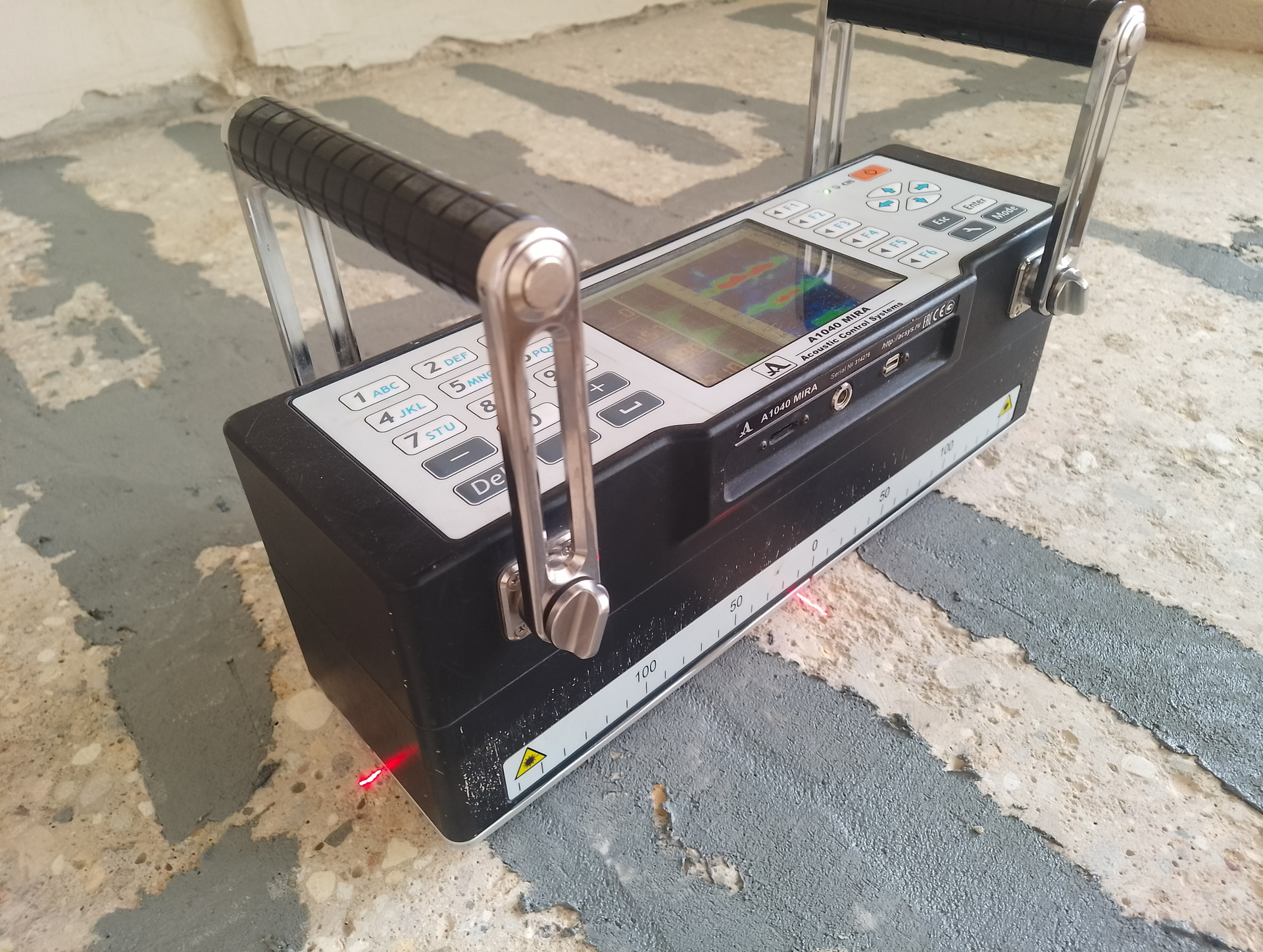
The ultrasonic echo method can be one of the tools for assessing and monitoring the continuity of the external reinforcement materials — reinforced concrete structure system.
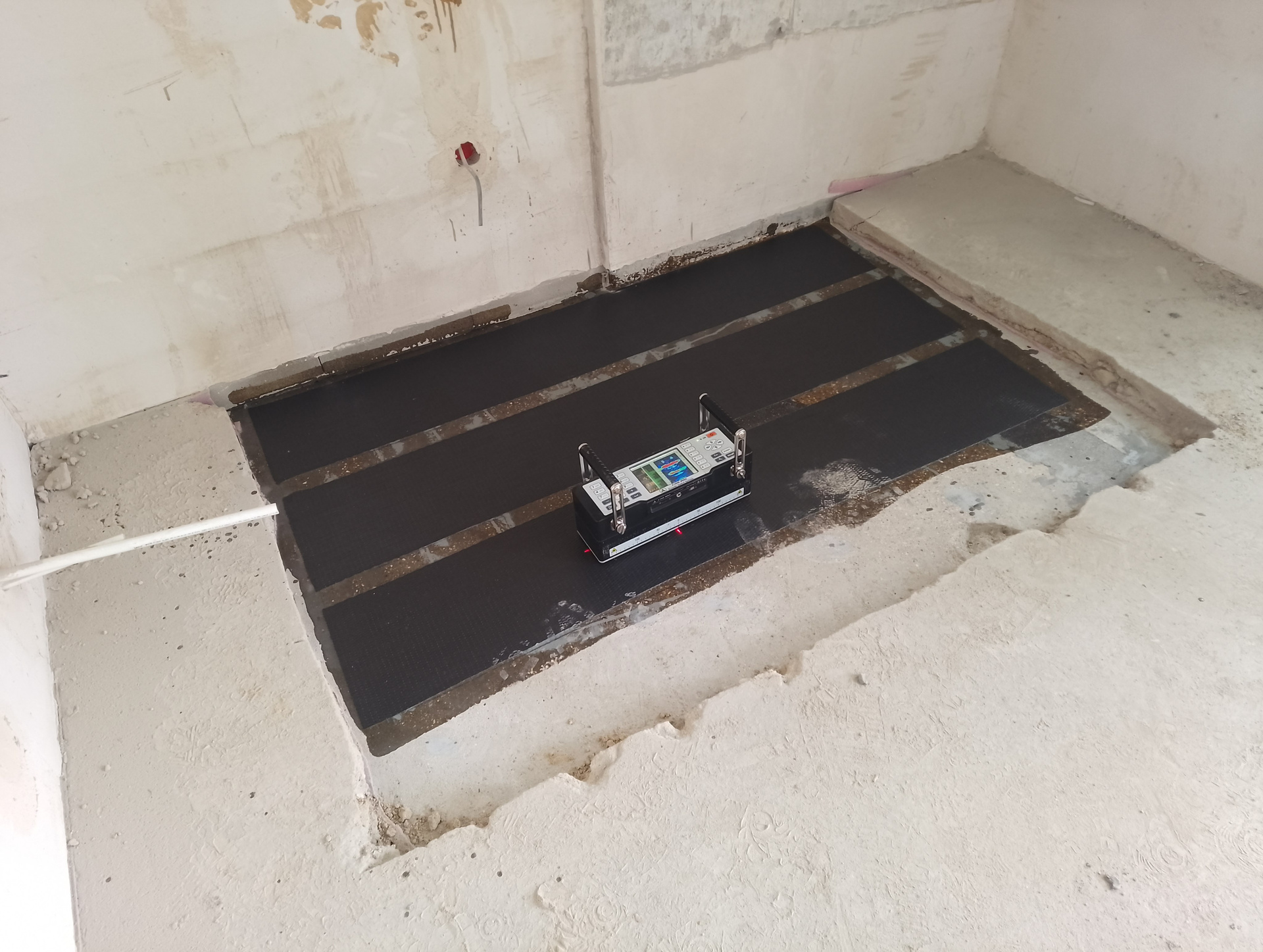
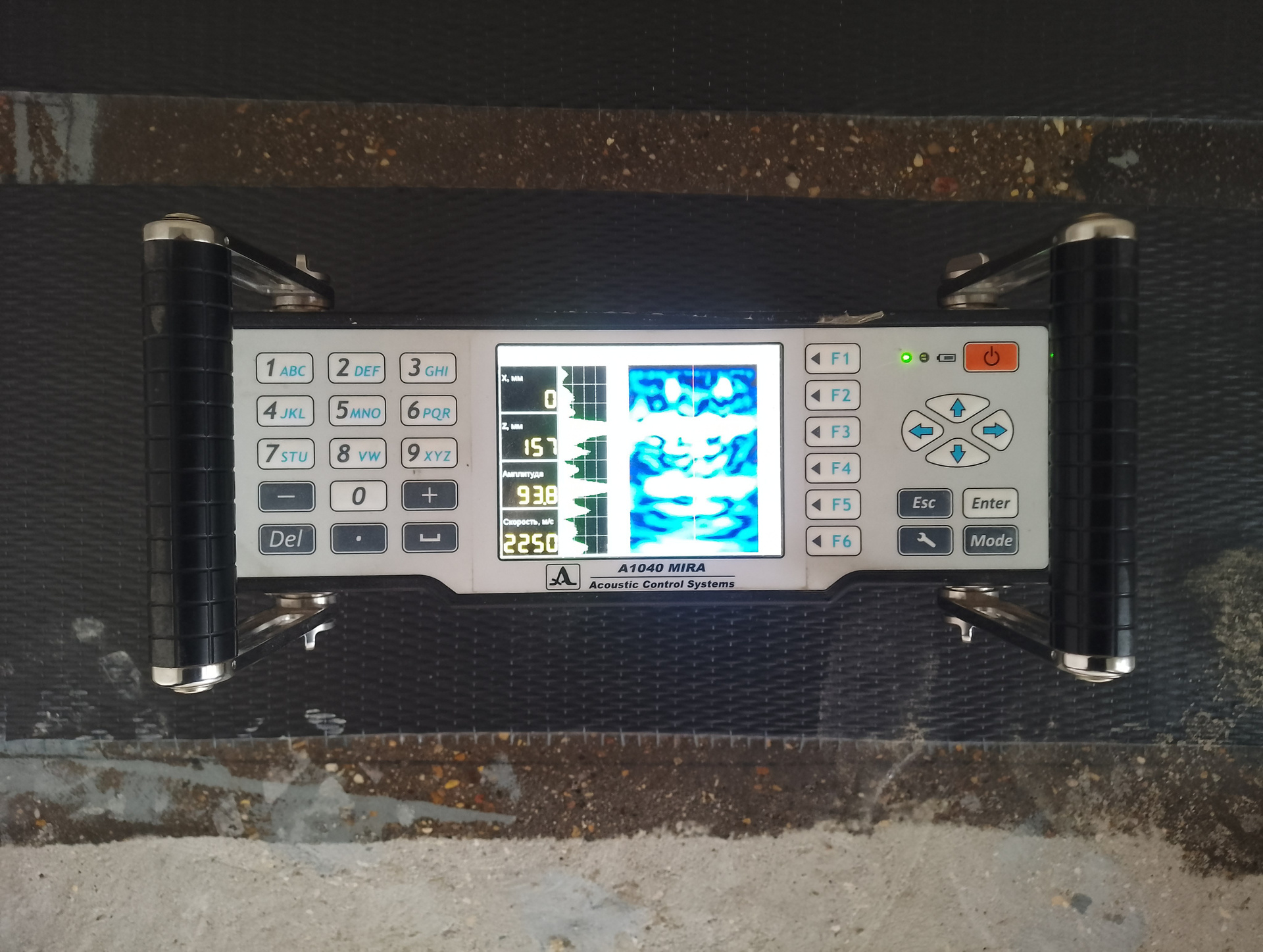

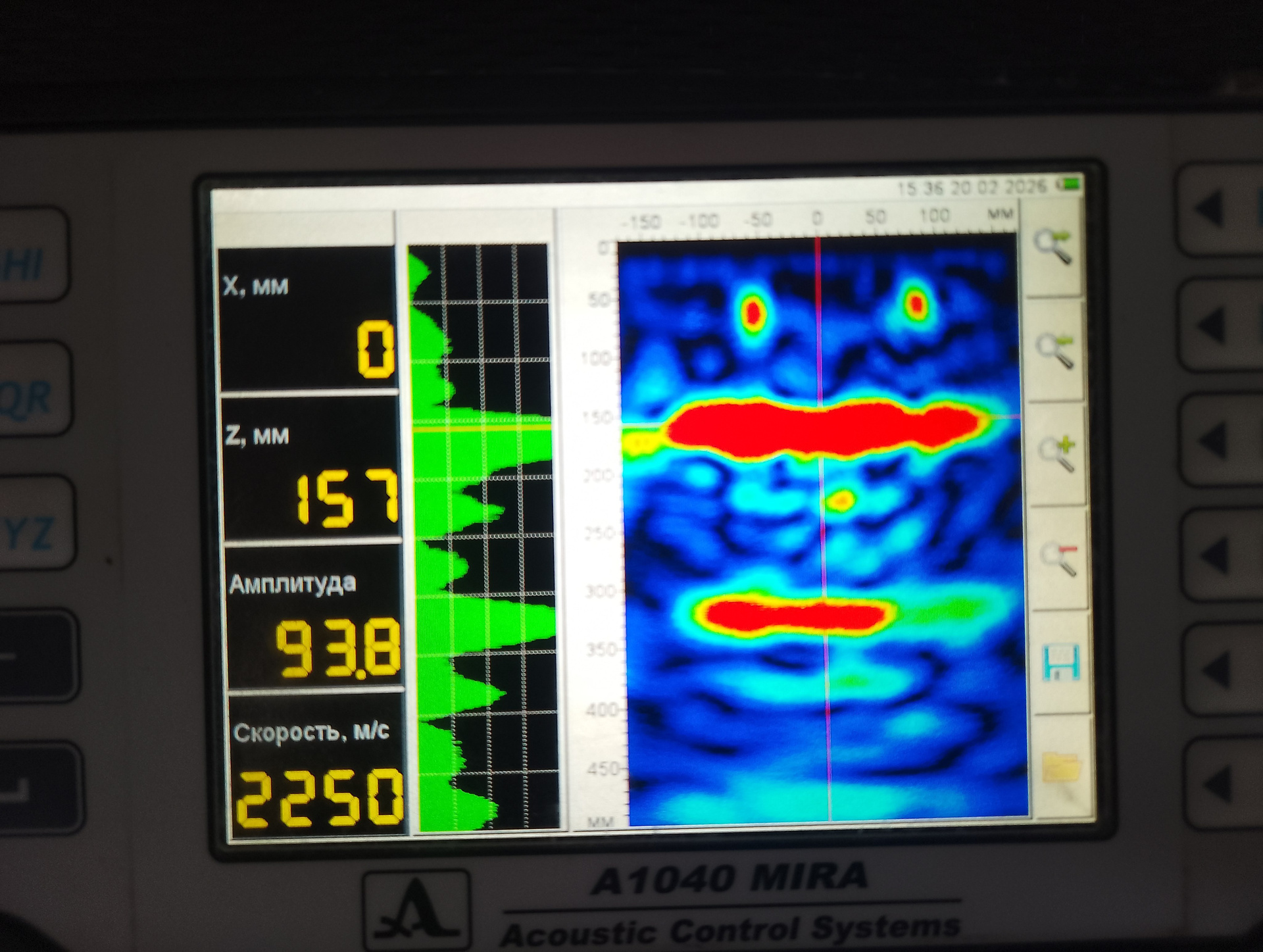
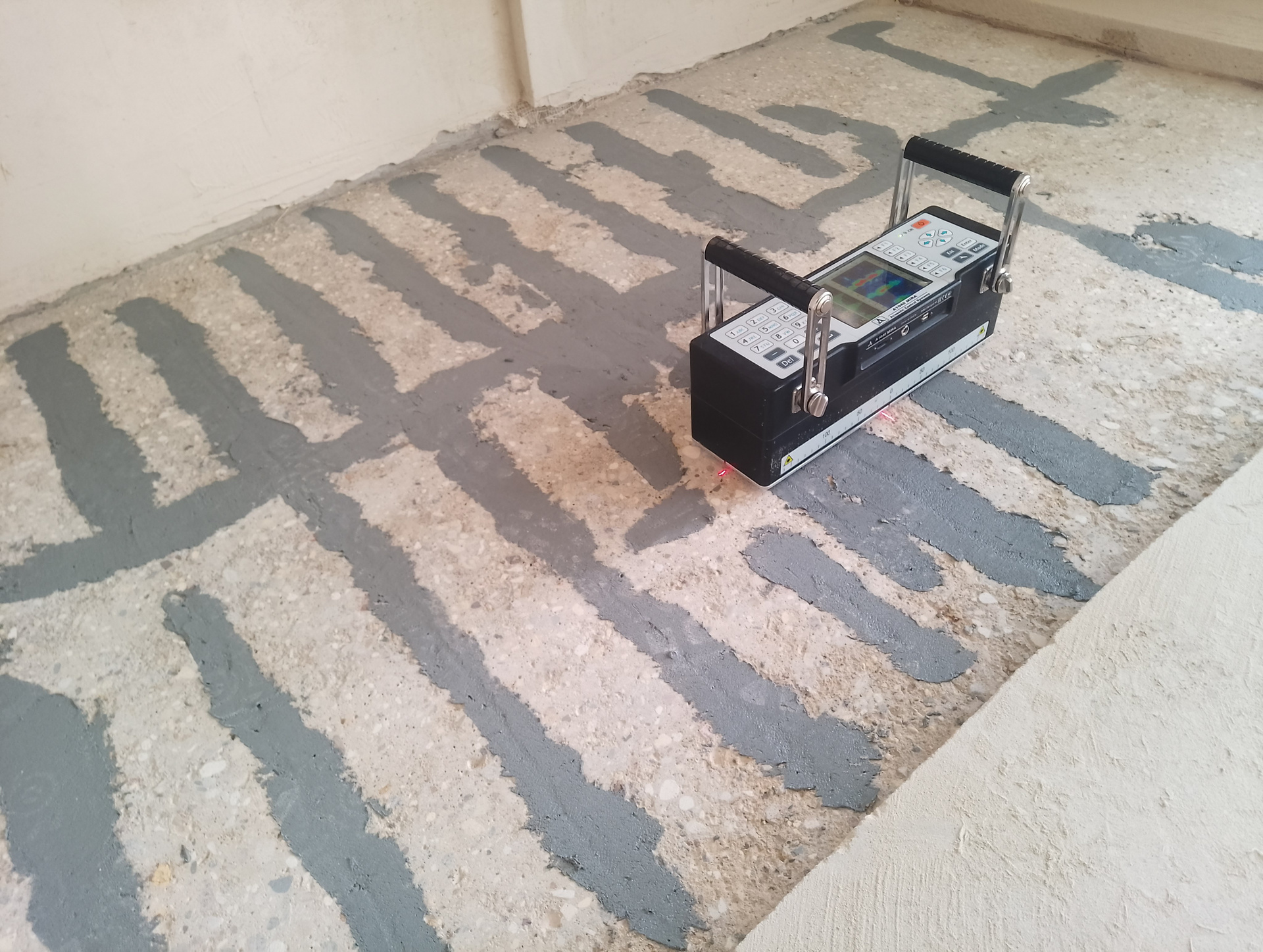
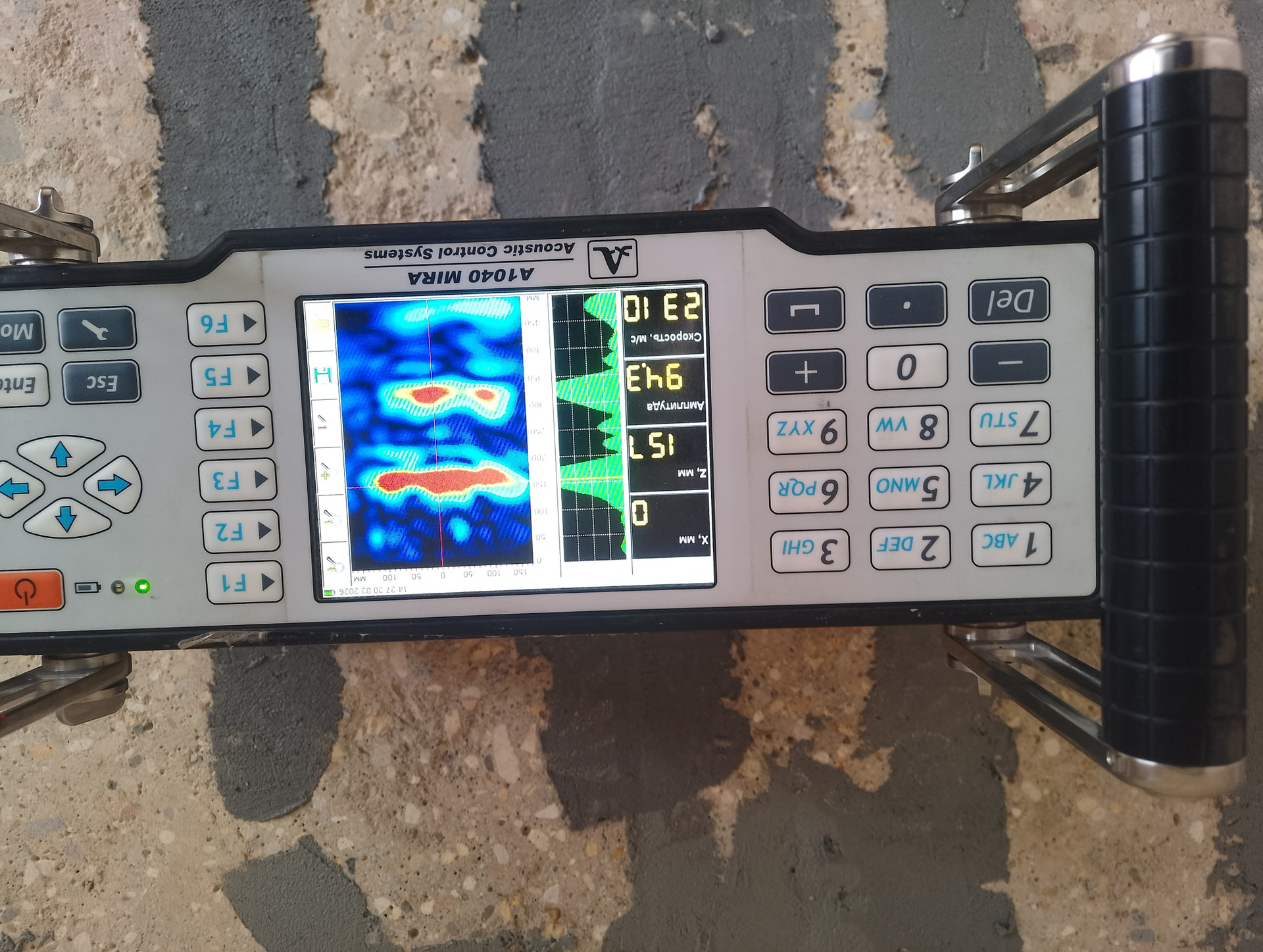
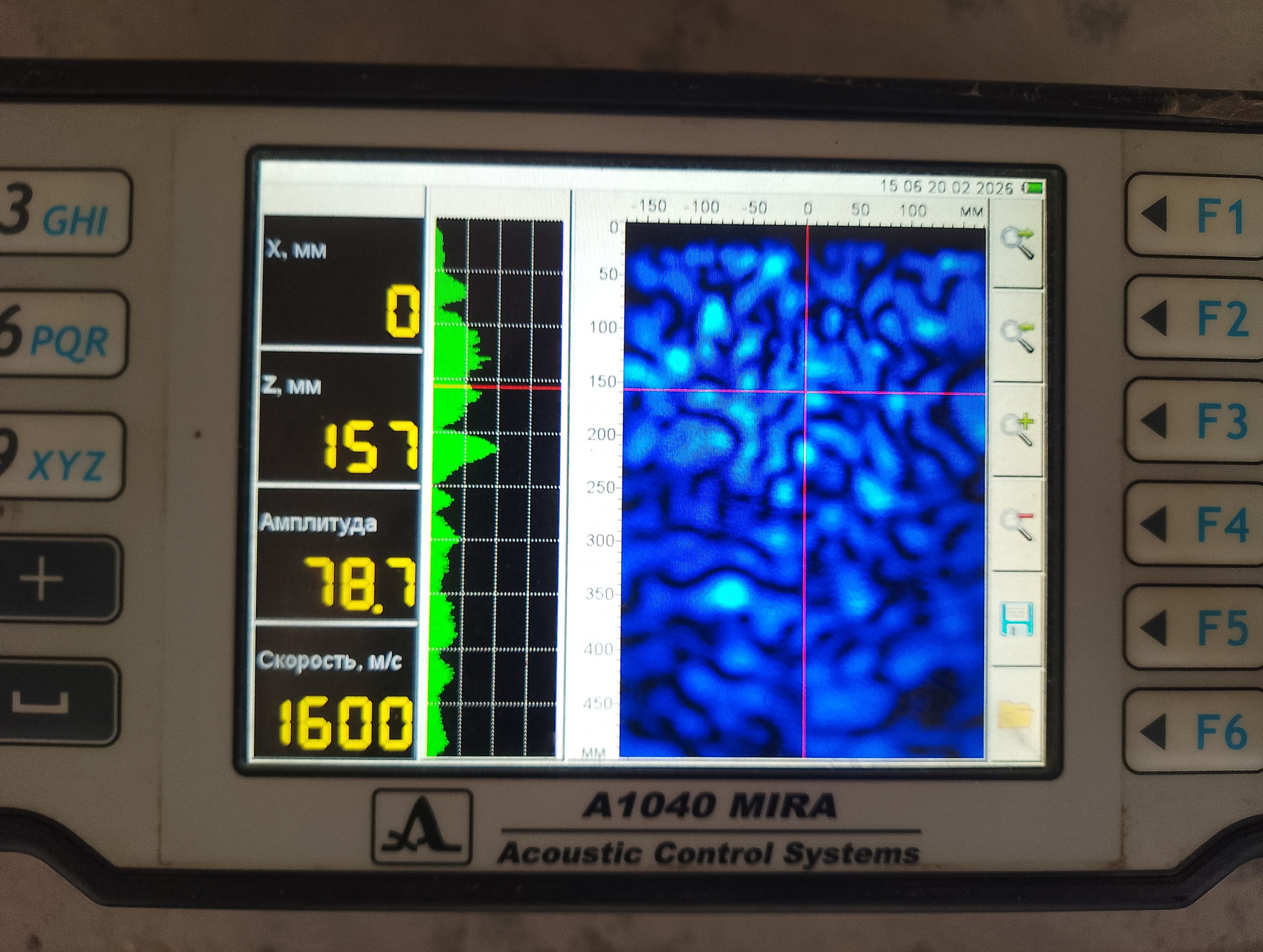
In areas without discontinuities and non-bonded sections of the composite, acoustic contact and ultrasonic wave transmission into the reinforced concrete structure will be ensured. B-scans (tomograms) of such areas will show a backscatter pattern, indicating this. B-scans (tomograms) of areas with discontinuities (non-bonded sections) will show no backscatter pattern. Tomograms of defective areas will show characteristic randomly distributed color-brightness highlights and structural noise.
When the device is operating in automatic ultrasonic wave velocity determination mode, the measured velocity values may differ from the values within the reinforced concrete structure.
As a result, quantitative measurements of individual reinforcement parameters (coordinates of reinforcement cage elements) or internal structural defects may contain significant errors.
Using the resulting tomograms, it is possible to qualitatively assess the internal structure of the concrete in a structural fragment in the area of external reinforcement with composite materials and determine the nature of the arrangement of reinforcement cage elements.


